Color of Pomegranates (1969)

Last week, Lady Gaga released a music video for her song, “911,” using iconography and influences from Sergei Parajanov’s 1969 film, “Sayat Nova,” (better known for its censored name, The Color of Pomegranates) based on the life of the Armenian poet, Sayat Nova. This video comes at a unique time, as the conflict between Armenia and Azerbaijan was only recently recommenced.

Sergei Parajanov was a unique and revered filmmaker that most people likely haven’t heard of. Before last night, I had no idea this filmmaker, or this film, existed. He was arrested multiple times by the KGB over the course of his life, spending several years behind bars on charges of “leaning towards homosexuality,” black marketing, and tendency towards suicide. These charges are often disputed as being fake, as Soviet censors attempted to keep Parajanov from making films. Out of prison, Parajanov continued to make some of the most poetically and artistically charged films of all time.

Last night, I saw a tweet linking the full film online, noting that the film was an Armenian classic and was a “poem” in itself. As a poet, I had to confirm this for myself. LORD y’all, they were right. This film is pure and unadulterated poetry in motion. Only a little over an hour-long, this low-budget film uses “dollhouse-like” sets with bright pastel colors, evocative, traditional Armenian costumes, and religious iconography to tell a story with hardly any words. There are only a few other movies that have truly drawn me in like Parajanov’s has, and I guarantee you haven’t watched something like this before (think Wes Anderson without dialogue, and on drugs, and kidnapped by a religious cult). 
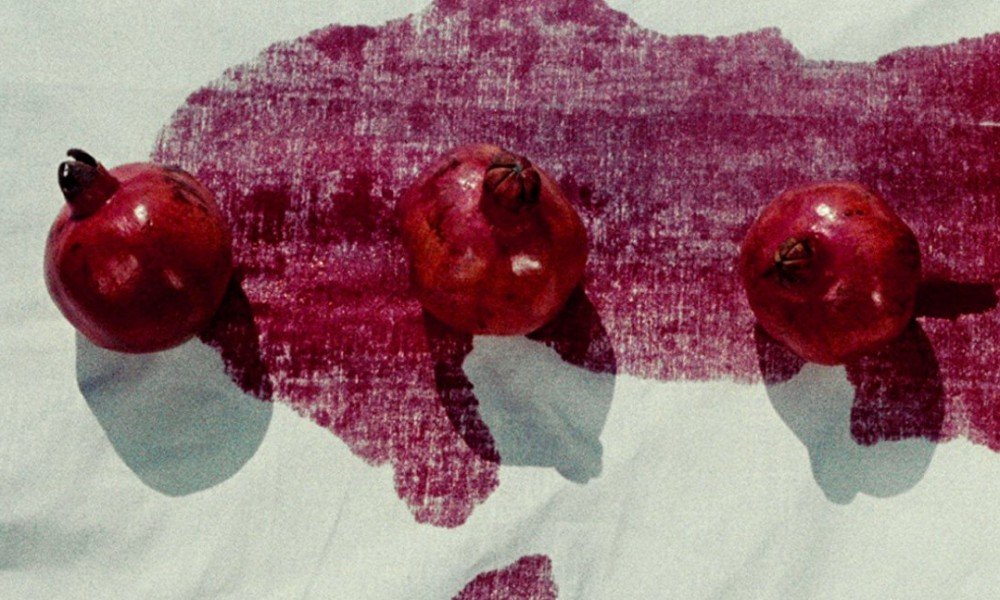

The film opens with the image of pomegranates and a knife bleeding pinkish-red into fabric, as the speaker (I assume is meant to be the poet, Sayat Nova, as the words/dialogue are driven by his poems and songs) whispers “I am the man whose life and soul are torture.” It follows a nonlinear format, moving between the poet as a child, as a youth, and as an old man. There is a fluidity that can’t quite be explained with words. Life and death become synonymous on the screen, as children are baptized, men and women work, goats are slaughtered, and Sayat Nova and his muse/lover (played by the same actress, Sofiko Chiaureli) stare intensely at the viewer while wearing a variety of Armenian outfits.
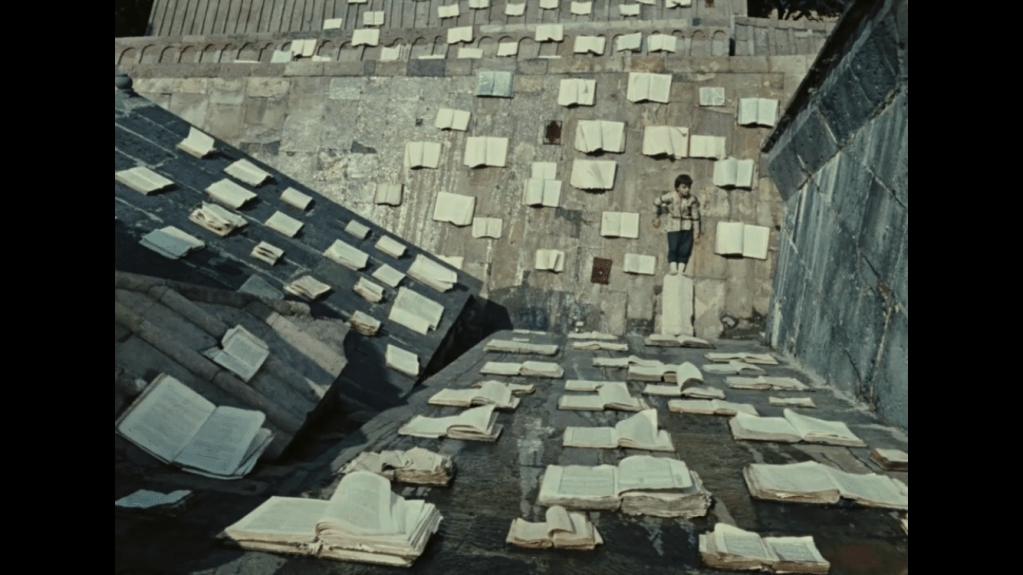


Sergei Parajanov is an artist and a poet at heart, as he said, “When I fell into the worst possible prison conditions, I understood I had a choice: either I would go under, or I would become an artist. So I began to draw. I brought with me out of prison 800 works.” He realized that he could transform pain and sorrow into art and poetry, and you can see that clearly in Color of Pomegranates. There aren’t many words spoken in this film but the ones that are are steeped in melancholy. Towards the end of the film, Sayat Nova as an old man walks a horse across the screen, as the narrator says “The world is like an open window, and I am weary of passing through it.” Scenes of animals being beheaded juxtaposition the poet’s actual life, in which he was executed and beheaded for converting to Christianity.


After making his film, Shadows of Our Forgotten Ancestors, Parajanov said he discovered his style: “That’s when I found my theme, my field of interest: the problems faced by the people. I focused on ethnography, on God, on love and tragedy. That’s what literature and film are to me.”

There is a quiet passion that hums below the surface of each scene in Pomegranates, much like how the best poetry can carry with it a soft intensity or a pulsating strength. As a queer person, I would even argue that much of the imagery in the film is queer in its genderfluidness, especially considering the actress Sofiko plays both the male poet and his female lover. Their scenes are overlapping, as in one scene where Sayat appears in blue and white, passes a hand over his face and the scene cuts to one of his lover, wearing the same colors, as if they are one and the same in love and expression.

It’s not a film that will please everyone, and I’d say you have to be in the right frame of mind for it. I’d go into it expecting a museum of art, not a plot-driven film. Parajanov said, “I think Sayat Nova is like a Persian jewelry case. On the outside its beauty fills the eyes; you see the fine miniatures. Then you open it, and inside you see still more Persian accessories.” Parajanov was also influenced by filmmakers like Andrei Tarkovsky, so expect to be induced into a dreamlike state, best enjoyed late at night with a glass of wine and maybe some funny cigarettes.
Either way, this film is stunning. It needs no poem because the film in itself is a poem.

Drive (2011)

Drive (2011) should be more aptly called, “Drive: The Better Baby Driver,” despite being made several years before Baby Driver even regurgitated its creation into being. Drive is Baby Driver if Baby Driver wasn’t produced and starring rapists like Kevin Spacey and Ansel Elgort. Drive is Baby Driver on a smaller budget, with a noir/synth-wave aesthetic instead of a 1950’s aesthetic wet dream with mommy issues. Drive is Baby Driver with better music (if sometimes a little “too” on the nose).

Okay, I’m done.

Drive begins as a slow burn romance drama in which a single mother and a quiet brooding car mechanic/stunt man have intense staring competitions and occasionally drive around to a synth-wave soundtrack. It is ridiculously soft and wonderful and lord do Mulligan and Gosling have some steamy chemistry. From the first twenty minutes, I labeled this movie a ‘chick flick’ due to the costume designer’s genius choice of having Gosling wear shirts half his size and slather him in car grease (because he’s a mechanic of course, not for any other reason, I’m sure the designer said to the director several times).

The second half of the film is more John Wick than anything else, which is fine, because, also, chick flick. The girls and the gays love to see a brooding dude go absolutely insane because of his intense need to protect a child and/or dog and/or lady friend (in this movie, ironically, he’s trying to protect the woman’s husband, the father to her child, whom the Driver has formed a bond with, and seems more motivated to protect their family as a whole rather than because of his interest in the woman).

Drive was originally based on a novel by James Sallis, who mostly wrote science fiction, noir, and crime stories. A big negative of the film is the whitewashing of the character of Irene, who was originally Latinx in the novel, like her husband. They do attempt to heighten the character of Standard, played by Oscar Isaac, who was clear in his discussions with the director he wanted Standard not to be a stereotype.

Unnamed Driver goes a little crazy in the end but (spoiler alert) ends up leaving town to brood by himself instead of inflicting more trauma on the woman and her child, which is more than Baby Driver can say (in which the young heartthrob ends up magically together with the girl in the end, despite likely traumatizing her forever, and the girl of whom looks just like his mother…but that’s another review for another time).

As always, here’s a poem; 

Drive (2011)

kaleidoscope of pinks, 

LA’s hazy skyline 

like a rising spine 

a smear of oil 

becoming 

as soft as a kiss, 

stolen, 

in the elevator

How I Met Your Mother (2005-2014)

So kids, I was sitting on my couch, trying to write a shoddy review about another movie but can’t concentrate because my eyes were constantly drawn to the TV screen where 30-something actors in terrible 2000s clothing were making bad puns and terrible life decisions. Instead of writing about a movie, I decided, why not just write about this show?

How I Met Your Mother (HIMYM) is one of those casual sitcoms that rarely gets a mention over the infamous Friends from the 90s or the wildly awful Big Bang Theory. I first watched this series in the summer of 2017, right before I moved to Fairfax. It was the summer after my parents split up and the summer I barely remember because it was spent in a haze of are we moving? Are we not? Will I have to transfer schools? Will I stay here instead? Or move to Madison to live with my ex-fiance (at the time, still just fiance)? What the fuck is going to happen in my life? It took me two whole weeks to watch the entire 9 seasons of HIMYM. It was mesmerizing to me, and still is, as I could barely concentrate trying to write while this show plays in the background even though I’ve seen it a dozen times at this point. Other shows never had that kind of hold over me.

HIMYM has this weirdly comforting, nostalgic, hilarious, and cringey vibe I can’t seem to get enough of. There are definitely episodes I end up skipping because they’re boring or I’ve seen them too much or there’s something that happens that I just can’t stand (when Ted, the so-called romantic, gets into a threesome, it’s gag-worthy). But for the most part, I adore these terribly tragic, sometimes adorable, always more-complicated-than-necessary characters and the show in its entirety. Unlike some sitcoms, where you can watch one in the middle of the season and not have much change, each episode connects to the next, building upon each other season after season.

It drives me crazy because for the most part, I hate sitcoms, and would usually rather watch a movie than start a new TV series. My boyfriend described sitcoms as being “stuck in one room; claustrophobic.” But I think for, at the time of my life when I first watched it, I was also stuck in one room, for the most part. I was stuck in limbo, not knowing where I was going to end up, on a life path I didn’t know I was going to be on. Being “stuck” in a New York room with Marshall, Lily, Ted, Robin, and Barney, their intimate chosen family, and the way Ted describes life as a wild adventure while always moving in one direction (towards the mother) was incredibly comforting. It’s comforting now, as well, being stuck in the house while everything goes to shit outside, and will likely always be comforting despite its antiquated jokes and horrendous season 9 ending.

I’ve watched too many video essays on the ending of HIMYM, for the last two episodes are likely the reason it gets passed over by so many viewers. The disappointment and betrayal of those episodes traumatized thousands of viewers who spent nearly ten years growing up with the characters, only to be brutally fucked over. I, luckily, watched it all in two weeks and by the time I got to the end… I was just as pissed. Don’t get me wrong: it’s AWFUL. If you haven’t watched it yet, I won’t spoil it, but I have many, many, colorful opinions on how they ended things. But it still doesn’t ruin the rest of the series for me, thankfully.

I also kind of pretend the last two episodes never happened and when I rewatch the series, I end it at episode 22 “End of the Aisle.” So that helps.

How I Met Your Mother (2005-2014)

the summer of ‘17

i wrote a poem about how sad people

always seek swingsets 

because they provide the motion

of life without ever actually going anywhere

real edgy, right? 

yesterday i wrote an ecopoem 

about rising from the earth’s surface

encrusted with dirt, moss-covered,

and maudlin, 

while this past semester i’ve been writing

a whole thesis of poems

and a blog of shitty movie reviews 

in disguise as poems 

suffice to say my poetry style

has changed quite a bit 

but my love of this terrible

goddamn sitcom still gets me

teary-eyed and giggling 

at the denim button-ups

and fake-satin blouses 

the transphobic and sexist jokes

the awful puns and all the mindless sex

of 30-something New Yorkers 

in a time before corona

in a time before Netflix

and Buzzfeed Unsolved

and iPhones

and decent fashion sense

this show feels sticky

humid 

clinging to my fingers

and dusted over with pollen

the virginia spring and summer vibes

glowing beneath the subtitles 

my knees still bend 

as if about to climb 

Appalachian trails 

or run down the street

to my old campus 

the old restaurant i used to work

the coffee shop i met all my first lovers

and keep running 

until i no longer see the blue ridge 

mountains or hear the cicadas humming

love songs in my ears

past the grassy mounds covering an old Dump

the ones that probably gave our dogs cancer

and hide holes filled with dead rabbits 

don’t mind all these references 

to my past life 

it’s just the show’s theme song 

sliding them back into my chest

a cassette tape of television laughter

glued into the back of my eyelids 

the laughter of ghosts 

still expelling joy 

la vie en rose 

and how i met all these new people

in new homes and new lives 

until nothing is new anymore

until new is suddenly the best thing

you could be to me 

until barney says nothing matters

unless your friends are there to see it

so nothing matters right now

we just have to spend the time that we can right now

living our best new lives

because this life is the new normal

nothing will go back to normal 

and that’s fine

our new lives will be legen-

wait for it- 

Paterson (2016)

You might recognize Paterson’s lead guy, Adam Driver, from a little known indie known as Star Wars (can’t blame you if you don’t know, it’s very niche). In the new SW trilogy, he plays an angry, volatile, and, quite frankly, whiny antagonist who throws around a shiny sword every once and awhile. In Paterson, he’s almost unrecognizable as the soft-spoken bus driver who loves Emily Dickinson and has a disgruntled relationship with a bulldog.

I think I’ve watched this movie about a dozen times since it came out. It’s a film I consider to be a “love letter” film, or a film that is primarily a love letter to a specific place. A lot of films are like this: Ladybird (2017) could be considered a love letter to Sacramento, CA. Columbus (2017) is an obvious love letter to Columbus, Indiana. An extraordinary amount of movies are love letters to classic places like New York City, L.A., or London. I personally appreciate a film that writes a love letter to an unconventional place, one that might not be “pretty” or “iconic,” is possibly affected by poverty or tragedy, or home to an unexpected amount of well-known figures. The filming process itself in these films should remain observant rather than exploitative or “voyeuristic” of that place.

Paterson is a love letter film to Paterson, New Jersey, a location that isn’t well known for being particularly pretty or drawing celebrity interest. However, for poets and writers alike, it should be known as a place where several writers lived a large part of their life such as Allen Ginsberg and William Carlos Williams. The film follows Paterson, named the same as the city, as he lives a quiet life with his partner, Laura (played by Iranian actress, Golshifteh Farahani) and their bulldog Marvin. He drives a bus and spends his free time writing short, free verse poems in his secret notebook. The film has no antagonist and no specific “plot;” the viewer simply becomes an observer of a week in the life of this small family and their interactions with the city of Paterson.

While Paterson is the “main character” of the film, the narrative is not focused on his story, or even his life. Paterson almost becomes the “city” itself, as we walk or drive through the streets with him, observing daily life and other people’s experiences. The poems spoken by him throughout the film (written by poet Ron Padgett) reflect on little moments and are not profound or even very “good” (in my opinion), but are simple, and fit the voice of the character perfectly. It’s really quite a beautiful film, and one that takes time to watch and appreciate fully.

Paterson (2016)

she said i dreamt of twins

and now he’s seeing double

down jersey streets blessed

Laura lying naked in bed

black and white intertwined

hands on a steering wheel

eyes peeled for a rhyme 

but only finding William’s

words imprinted on the water

of paterson falls the dog asleep

in the window of a pink house

dinner pie made of brussel sprouts

and cupcakes with frosting sweet

a bus stopped on the street a fire

ball in the air the water on a girl’s

hair slowly dripping into a mug

of beer the clink of glass on wood

some call it rain but i call it love

Very Brief Analysis into the Music of 2000s Movies

Upon searching Spotify for a “2000s” mix, I realized what I consider to be 2000s music is very different than other people’s. The Spotify mix was full of Bruno Mars, Black Eyed Peas, Lady Gaga, Rihanna, Usher, the usual jams of what I see as the 2010s. Where was the soft punk, the light pop of my favorite childhood movies? But then I realized my issue: I was basing my perception of the music off my childhood nostalgia of watching movies from 2000-2006…almost all of which primarily use 90’s music in their soundtracks. From Mean Girls to 10 Things I Hate About You (admittedly, this is a cusp film, having been made in 1999 and released in 2000) to Freaky Friday to Holes, and so on. Early 2000s movies were still largely influenced by the music and life of the 90s and much of the music I grew up hearing was not, in fact, from 2002, 2004, etc. but early to late 90s music like Letters to Cleo, The Cranberries, blink-182, Eels, Spiderbait, The Cardigans, Air, Semisonic and so on.

My perception of what the “2000s” sounds like is actually a distorted one. I set out to make a new Spotify playlist titled instead “A 2000s Movie” with music not necessarily from the 2000s but that give the “vibe” of what I recall to be 2000s music/movies. Suffice to say, it ended up over 3 hours long and I was up until 3 am making it. Do I regret it? No. Am I exhausted? Yes. Am I jamming out to this playlist right this minute? 100000% yes.

P.S. The only movies I watched this week were more Bollywoods and Midsomer, and I didn’t feel like writing about any of them. 

Haider (2014)

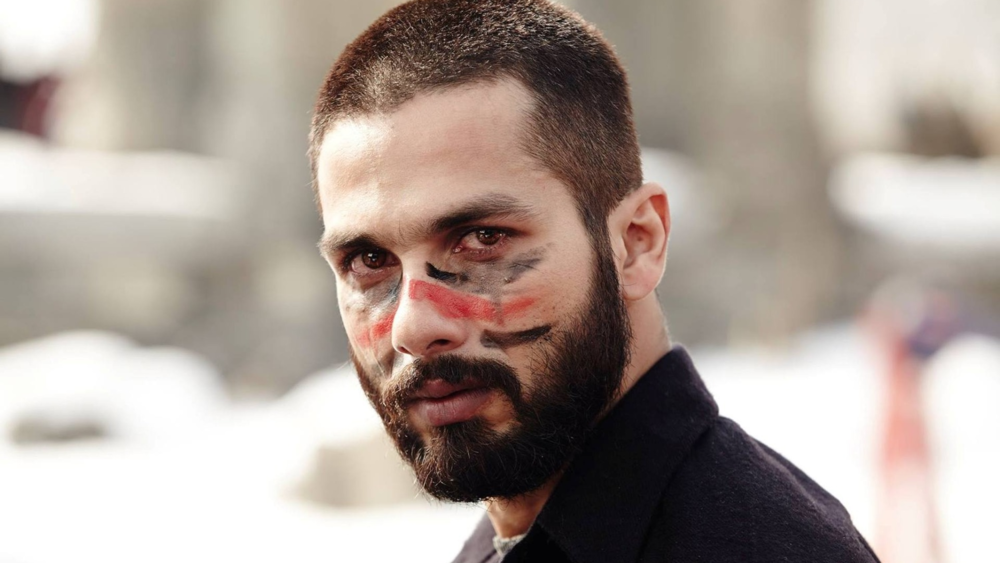
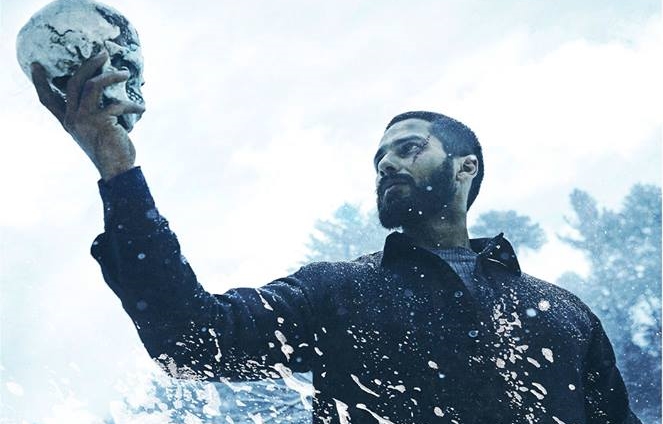
I’m on a bit of a Bollywood kick this week. Since Saturday, this is my fourth Bollywood. My film professor from last semester originally told me about Haider, when I asked her if there were any more Bollywoods she’d recommend (after she had the class watch Om Shanti Om, I was officially obsessed). Haider was the first one she told me about, in addition to sending me an email list of about a dozen more. I finally got around to watching the Hamlet adaptation (yes, a Bollywood Hamlet) last night and I wasn’t disappointed because holy fuck is this a crazy film.

I went into this film having no prior knowledge of the Kashmir conflicts, and so half the time I spent watching the movie and the other half I spent frantically googling what was going on. While the film remains an adaptation of Hamlet, with the brooding and wonderfully emotional main character, Haider (played by the brilliant Shahid Kapoor) avenging the spirit of his dead father against his uncle, it is primarily an intimate portrayal of the Kashmir conflicts as they were in the 1990s, adapted from Basharat Peer’s memoir, Curfewed Night.

Setting the story of Hamlet against the brutal and stunningly visual environment of Kashmir was probably one of the best decisions a filmmaker has ever made when adapting a classic Shakespeare narrative. The Kashmir and Jammu conflicts have left thousands of people “missing” or “disappeared” as well resulting in as many as 40-100 thousand dead: Haider spends much of the first part of the movie searching for his missing father, protesting along with the other civilians and their missing family members. When he finds out how his father died (after being brutally tortured in an illegal prison camp due to his political uncle turning him into the police) he, rightfully, starts going a little crazy. And because this is a Bollywood, Hamlet’s classic scene where he puts on a play for his uncle and mother while accusing him of murder, is turned into a full-blown dance number, with vivid dancing costume colors set against the stark white snowy landscape of the Kashmir mountains.

Because of its tense topic and filming location being right in the middle of Kashmir, the film was briefly boycotted in India before its release due to its depiction of torture by the Indian Army: despite that, it was well-received in many countries, and was even the first Indian film to win the People’s Choice Award at the Rome Film Festival. And rightly so, as this film is brilliant. I’ve never seen a more dramatic Hamlet: Haider makes for such a believable character, in his determination and compassion for much of the first half of the film to his bitterness and violent anger by the second.

You, like most consumers of media, are likely sick of the endless Shakespeare adaptations but I think if I were to recommend one more, I’d recommend this one. You’ll forget you’re watching a Shakespeare movie only a few minutes into the film, as the lives of the people of Kashmir take center stage.

Haider (2014)

Shall I compare thee to a cool movie? 
To watch or not to watch that is the Q
Short or long i don’t care as long as we
Can eat a lot of snacks and wine for two 

Snowy mountains where our hamlet presides
Amidst gunfire and bodies piled in trucks  
A dead father and an uncle who lies 
Don’t cry or fret this Shakespeare doesn’t suck

A poet and reporter fall in love 
Like good ophelia and dear hamlet 
Are doomed to suffer as red-painted doves
In fair Kashmir where our story is set 

Sonnets are so hard to write holy shit
Now you should watch the film: it’s really sick

(no I didn’t do iambic because fuck that) 


The Parasite (2019)

The world must be ending because Hulu is finally a decent streaming service: first Portrait of a Lady on Fire, now Parasite (and they just added Detective Pikachu now that HBO is free for the rest of the quarantine, aka for a year at least)?

I was first introduced to Bong Joon-ho with his icy thriller Snowpiercer (2013) and to this day it remains to be one of my least favorite movies. I was, notably, a lot younger when I watched it but seeing even one clip of it still puts a bad taste in my mouth. It’s unique and makes great commentary, as most of his films do, on class divisions and does it in a stunning visual way. While some disturbing films are entrancing and keep me at the edge of my seat, I found myself wanting to look away or always had a “is it over yet?” mentality while watching Snowpiercer. Years later, I watched Okja (2017) and I absolutely adored it. As a vegetarian 4-years in, I found the visceral comedy/drama of Okja to be a pro-animal/pro-veggie film without beating you over the head with it: rather, it’s focused on the story and shows negative sides of the meat industry as well as the activist environment. We’re meant to root for the little girl and her big pig, not either of the “systems” attempting to control them. Then, in my horror class last semester, we watched The Host (2006), which also melded comedy and drama with horror and psychological thrill.

If it’s a Bong Joon-ho film, it has to be weirdly funny in a lot of ways but also horrifying in a way that you aren’t expecting. The Parasite (2019) is unexpected in its horror: it’s more of a drama and comedy with elements of horror. Like a frog slowly cooking in a pot, you stew in the easy, relaxed atmosphere of two families separated by class and the methods they employ to survive. Halfway through, you’re still thinking, “Is this really a Bong Joon-ho film? Where’s the terrifying monster, giant made-up animal, or society-driven gross-out factor?”

Like any Joon-ho film, the visuals are exquisite. The stark cleanliness and bright whites and blues of the Park family compared to the run-down, basement apartment in muted yellows and browns of the Kim family are mesmerizing. You’re lulled into a false sense of safety, and to avoid as many spoilers as possible, I’ll stop there. I’ll quote Joon-ho himself, when he accepted Best Director at the Golden Globes: “Once you overcome the one-inch tall barrier of subtitles, you will be introduced to so many more amazing films.” 

The Parasite (2019) 

sniff me, i dare you

climb up the stairs

on your knees 

trailing blood 

and chunks of cake

the icing still stuck

sickly sweet

in the tangled hair

of this nuclear 

family; disaster

and diamonds

should be next
to each other

in every dictionary

we break skulls 

and bathe in peach

wine, sirloin steak 

between your toes, 

just to get a taste

of that delicate madness;

capitalist breath

on your neck.

honey im home

give me a kiss

and i promise 

to use the soft end

of the knife 

Portrait of a Lady on Fire (2019)

Sometimes, when we attempt to comprehend a film, we lose sight of the experience of the film itself. As a certified non-expert in the film field, and in any field for that matter, this is an old concept. The vast majority of people are of the mindset of “Stop talking and just watch the fucking movie.” I’m a part of that boat, but also on the same boat that argues any form of art demands to be analyzed and critiqued: that without critique, we run the risk of being drawn, like Romero zombies, into relentless propaganda, capitalism, racism, sexism, transphobia, and all of the other things film has been wonderfully expressive of since its invention.

What I’m trying to say is, like any film, Portrait of a Lady on Fire deserves critique and analysis. But, as a queer, feminine person, I have no critiques to offer. It is, simply and without a doubt, a beautiful celebration of the female gaze, female love, and holy shit the visuals are fucking gorgeous. Just, just watch it.

Portrait of a Lady on Fire (2019) 

undone by her gaze 
and by her hands 

undone by embers 
blazing on hems 

lifting cloth from
her mouth unveiling

lips designed
for dismantling

her every nerve
electric 

bury her beneath
the waves of soft-

ness undone by 
19th century

sensibilities 
wrap her arms 

around her waist
beg her to stay

and fall asleep 
thinking god

i’m so
fucking gay

Seeking A Friend For the End of the World (2012)

Fitting choice for the times, I believe? I watched this movie several years ago and wasn’t a huge fan; upon rewatching in the midst of the current quarantine hysteria, I have a newfound appreciation for the casual apocalypse genre. I love the movie’s dry humor and related, particularly, to Keira Knightley’s character, Penny, but also was always slightly creeped out by the age difference between her and Steve Carrell’s character, Dodge. The movie is called seeking a “friend” at the end of the world but the story inevitably turns romantic, which always seemed like a need for it to end “happy” despite a literal asteroid hurtling towards Earth. There’s no way to end other than death. Still, most American film storylines always have to end happily in some way, so the romance was their measly attempt at that. Best character, however? The dog named Sorry, so named because of his previous owner abandoning him with Dodge with a “sorry” note.

The apocalypse in this film is slightly different than the one we are currently dealing with; no one hoards food and toilet paper in the movie because they’re all gonna die in three weeks, so it’s fairly pointless (it’s fairly pointless now too, but tell that to the guy buying ten bags of toilet paper and leaving nothing for those who actually need it). Everyone is also desperately traveling and going outside and having wild orgies, which is the opposite of what we’re doing: staying cooped inside and avoiding other people by at least six feet. 

It says something to be watching a movie about the literal apocalypse and think; wow that sounds better than what we have right now. Because the thing about an asteroid hurtling towards Earth: it’s all equal. No matter how rich you are, whether you’re a celebrity or a cleaning lady, you’re all fucked. You will all die and everyone is brought to their knees despite all of the rules we’ve made up in society like “class” and “important figures.” During a virus, however, no one is equal. Right now in the US, celebrities and rich folk are being tested and treated, whereas those who can’t afford insurance or aren’t Idris Fuckin Elba have to just hope for the best. Meanwhile, states are voting against the one and only candidate who wants free and comprehensive healthcare, during a goddamn pandemic.

It’s not all bad, of course. Looking out my bedroom window after watching this movie, there are more people outside than I’ve ever seen in my time living here. Children playing in the streets, teenagers biking and skating down the sidewalks, folks doing yard work and smiling at each other passing by (giving everyone a six feet berth, of course). Despite the fear, neighbors are still having conversations from across the street, their dogs pulling at the leashes in an attempt to interact with each other. There’s still a lot of beauty in this world even during the apocalypse, and I think casual apocalypse movies like Seeking a Friend attempt to show that. So let’s be kind, be compassionate, but give each other space, and maybe we’ll get out of this alive. 

Note: I went to New York about a week before the real madness hit, and so this poem is more in response to the trip/corona than to the movie. 

Seeking a Friend At the End of the World (2012), or Holding Hands During the Apocalypse

stepping off the bus into the city, my neck cranes upwards, gazing at the buildings as if they are trees,
pine branches extending towards the heavens.

we weave through streets, avoiding potholes and bags of garbage, unruly stones in the pathway. someone coughs and we jump,
hurrying faster. 

the apartment is at 80 Park Avenue, the lights of corporate Metlife blinking at us like ashy stars, the hum of Grand Central trains and subway cars rumbling beneath our feet,
unquiet roots. 

the queen bed envelops me,  a cocoon, his arms around my shoulders. all i can think about is how sweat clings to us as morning dew clings to blades of grass, and how much i want to kiss his pomegranate lips but it’s 3 am
and outside, sirens are screaming.

at this point they’re saying stay six feet away from other people, as we hold hands and wander through Time Square, steam rising from vents, smoking beds of fire. a man waving tickets leans towards us yelling,
“Comedy Central shows, we got corona”

stop going to restaurants, people are texting, as i stare at the plate of sushi before me, the seats around us nearly empty and the TV screen above the bar
is white, blaring, a bird’s warning call. 

hiking the Appalachian trail is nothing, i know now, walking twelve miles through a diseased city, hands slightly shaking as i take pictures with my phone, swiping away news articles popping up, unwanted weeds receding,
further, into the dirt. 

bile rises in my throat, staring at the horses chained to carriages, bones sticking out of flanks and heads cast downward, pigeons raiding their buckets of food. she merely flicks her tail, chewing slow, and i want to leave, i want to leave, but her image keeps me there,
bit in my teeth, the taste metallic. 

the waves next to battery park smell of sewage and salt but tourists are covering their mouths for an entirely different reason. a homeless man nearby hides behind a sign scrawled, i might as well be invisible, and i wonder if the first people who experienced an avalanche ran away or simply
waited and watched as it drew closer.

on the final night, i lean over the edge of the balcony’s precipice, shining empire state looming mountainous, and i imagine the ground below is a dark lake, yawning up at me, and promising,
gently, to swallow me whole.

Ponyo (2008)

Ponyo was one of the Studio Ghibli movies that came out past the “nostalgic” Ghibli phase. It was a modern Miyazaki, having been released in 2008, with the colors ripe and bright, the animation smooth, and the English voice actors well known (Liam Neeson, Cate Blanchett, Matt Damon, Betty White). For me, I grew up with Kiki’s Delivery Service (1989), Castle in the Sky (1986), Spirited Away (2001), and My Neighbor Totoro (1988): the soundtracks of the movies essentially becoming the soundtracks of my childhood. Ponyo, however, came later, and I remember watching it the first time with a mixture of “This is kind of okay” to “Oh god what is happening.”

I’ve rewatched it every few years, not nearly as much as the others, but just enough to keep the awful theme song in my memory (that’s a lie: I usually block it out, a trauma response, immediately after watching it). Each time, my response to the story gets lighter and lighter. I’ve realized Ponyo isn’t nostalgic for a number of reasons, not only because I was older when I first watched it, but also that it doesn’t treat the world as a beautiful, perfect pocket of life like many of the ones I grew up watching.

Ponyo is honest with its depiction of the ocean; it’s immensely beautiful and even frightening, but also infested with waste, plastic, and polluted beyond belief thanks to human society. The environments of Kiki, Castle, and Totoro, meanwhile, always seemed pristine, clean, and magical; untouched by the hands of humanity. You wanted to live inside their beauty, whereas Ponyo you’re forced to pause and consider. I’m ignoring some of the other Miyazaki movies that do address deeper/harder issues for now (Princess Mononoke, Nausicaa, Grave of the Fireflies) and primarily focusing on the movies I grew up watching, the more child-focused ones.

Ponyo is also honest with its family life: Sosuke’s dad works out at sea while his mother takes care of the house on the hill as well as works at the local elderly home. She is openly angry with the father, who chooses to take another several weeks (or months even) at sea instead of coming home to family. Her loneliness is apparent, even as she tries to make things happy and content for Sosuke. The families of Totoro and Kiki, meanwhile, were always quiet, idyllic, untouched by trauma, even soft when they were lonely (the mother is sick in Totoro, and Kiki has to leave home to be independent, but the families were always still smiling and happy usually). Ponyo’s family is just that slightly more honest and real with its home life, which is jarring for someone who grew up on strange and gorgeous Ghibli worlds you wanted to sink into rather than be faced with reality.

The story has grown on me, incredibly. It’s silly and magical, of course, but also has that touch of reality that the new generation is forced to deal with. My friend and I still screeched with laughter whenever Ponyo’s Kermit the Frog face appeared in her half human form, and giggled immaturely at the ocean’s “big titty” lady form, but I think that’s part of the new media as well. Days after the corona-virus appeared, people were online making jokes about it (still are). When world war III was being threatened only a few months ago, tweets and Facebook posts constructing memes about the draft were already everywhere. Generation Z is a land rife with family trauma, global warming scares, and terrible presidents, but damn if we don’t laugh in the face of it all. 

Ponyo (2008)

golden fishes gleam

beneath an avalanche of sludge 

the ocean weeps as we watch

glimmering screens 

portraying an embodied entity

unnamed other than

the Sea Mother;

only her hair is bright pink

instead of trailing seaweed

medusa’s lover writing 

letters which end up soggy

by the time they reach her

someone would drown

in the tears of our Earth

before we learn how to sing

one verse of Ponyo’s

ungodly theme song


save the kisses 

for the starfish choked by plastic

The ramen in this movie always looked so fucking good tho